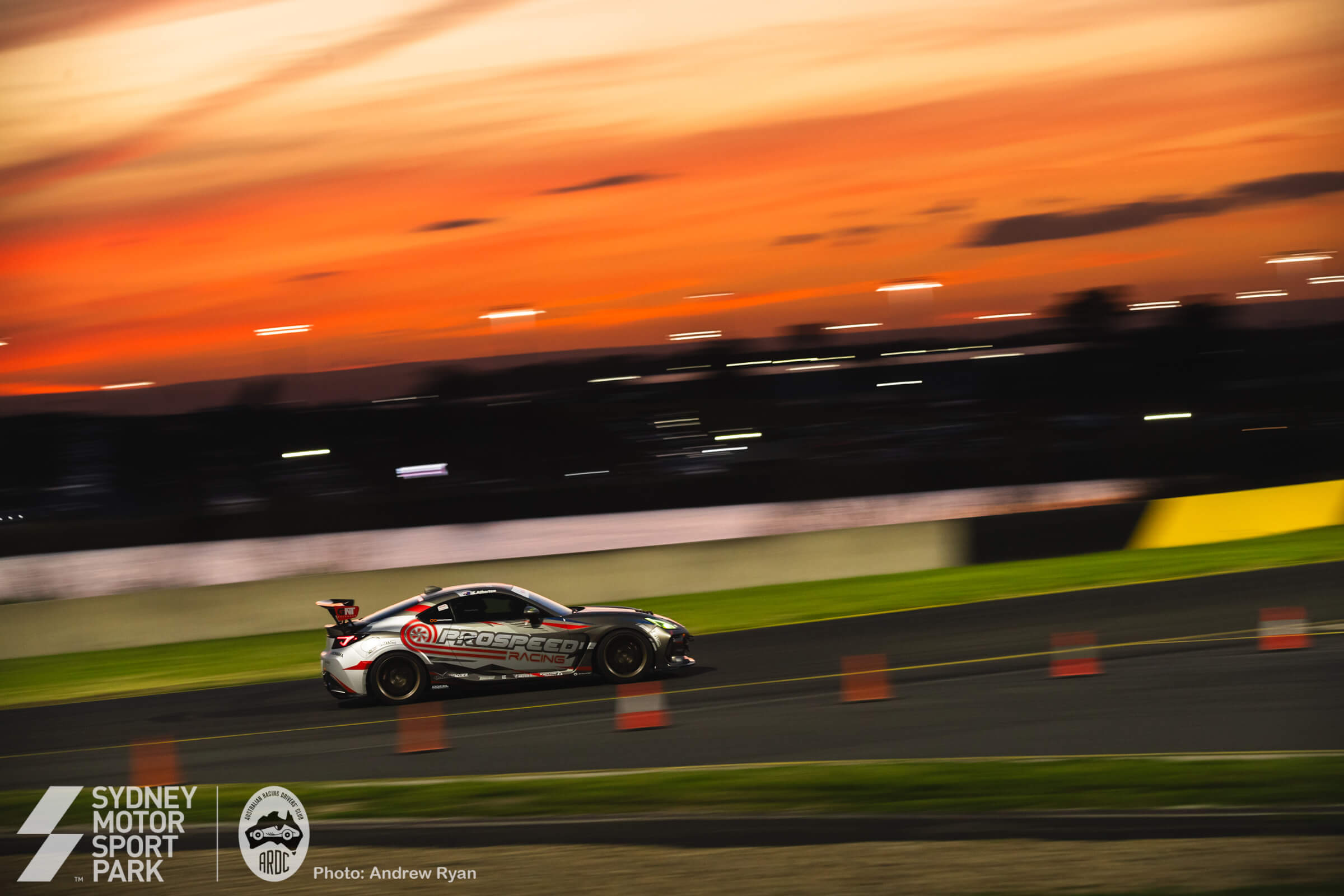
Solar
Since 2016Three service-block roofs at the Druitt North pit building, plus the AMIP precinct.
- Installed
- 2016
- Panels
- 192, SMSP and AMIP combined
- Avoided
- 60 tonnes CO₂ per year
- Why
- Cut electricity cost and grid draw
 Australian Racing Drivers' Club
 SMSP
SMSP
Seven programs run at Sydney Motorsport Park — energy, water, waste, carbon, biodiversity, community and innovation. They are not equally developed, and this page does not pretend otherwise. Every figure below carries the period it covers and the document it came from.
Some of these are a decade old and audited quarterly by a third party. One has a single published figure behind it. We have given each the depth its evidence supports, so the shape of this page is itself a kind of disclosure.
Sustainability in motorsport is an enduro — not a sprint. It is also a race with no chequered flag, as there is always more that can be done.
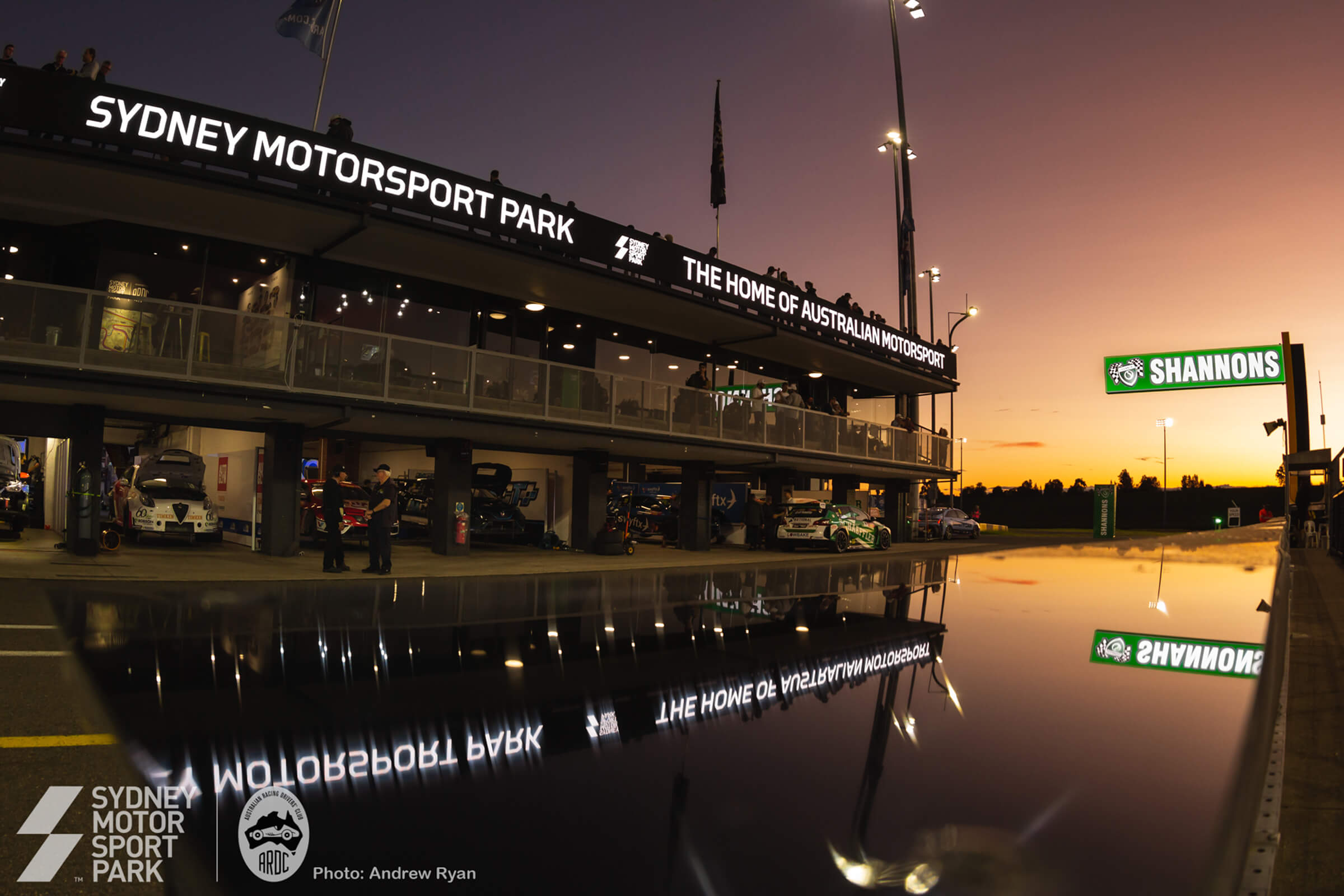
In 2016, when almost no Australian motorsport facility had any, the Club put solar on the roofs of the three large service blocks attached to the Druitt North pit building. It was not a gesture and it was not enormous. It was early — and it has been compounding ever since, through a full LED conversion in 2018 and the first dedicated EV rapid charging at any race circuit in the country.
A modest array, and we would rather say so than round it up. Its job is to offset the buildings that keep a race weekend running — and, since 2022, the digital signage that replaced printed corflute across the venue.
The Club publishes the figure combined across SMSP and AMIP. No per‑roof split has been published, so none is drawn here.
Three service-block roofs at the Druitt North pit building, plus the AMIP precinct.
Every antiquated bulb and fluorescent tube on the premises, replaced with LED from 2018 with Aqualuma.
The Hyundai N EV Rapid Charging Station — grown out of two chargers installed for the 2023 Hyundai N Festival, now a five-year partnership and open to every EV brand.
Water is the least developed of the seven programs, and this is the shortest section on the page for that reason. There is one published figure and one standing commitment behind it. Rather than pad it out, here they both are.
“40,000 kilolitres (kl) = 80% of total”
Quoted exactly as published · SMSP Sustainable Event Guidelines, August 2024 (v1.02), p.4
“Monitor and reduce energy and water consumption, noise and air emissions.”
One of the Club’s eight published Key Programs and Actions. Water is not run as a stand-alone program — it sits inside site monitoring, alongside energy, noise and air.
Key Programs & Actions · 2024 onwardsFrom the Water section of the Event Sustainability Plan checklist that every venue hirer works through.
Event Sustainability Plan · WaterNo stormwater harvesting figure, no irrigation system and no consumption-reduction percentage has been published by the Club, so none appears here. When there is a measured series to show, this section will grow.
Outline means stated, not measuredA race weekend generates a startling volume of waste, most of it mixed. Since Closed Loop became the Club’s sustainability partner in early 2022, that waste has been separated on site into nine streams — not by a machine, but by people, by hand, for hundreds of hours a quarter. It is the most scrutinised program at the venue and the only one with four audited years behind it.
In the second quarter of 2025 alone, Closed Loop staff spent more than 270 hours hand-sorting waste at Sydney Motorsport Park to lift the diversion rate. Every venue claims to recycle. Almost none can tell you how many hours of someone’s work it took.
Nine streams, separated by hand — 270.74 hours, Q2 2025
Audited quarterly by Closed Loop, measured by volume in cubic metres. Latest published period: Q2 2025 — 254.95 m³ diverted.
In 2023/24 the diversion rate fell. The Club published the drop and the reasons for it rather than quietly reporting a rolling average:
It recovered to 79.3%. Both numbers are on this page for the same reason.
A closed loop that closes on the site that produced it. 120,000 cups collected through Simply Cups — number one in Western Sydney.
Four streams at front of house. Nine behind it, plus hard plastics, e-waste and helmet waste added through 2024.
Carbon at Sydney Motorsport Park is not a separate program — it is the sum of the others, plus a commitment to measure what has never been measured. So rather than a headline target, here is the account in three parts: what has been reduced, what has been committed to measurement, and what nobody has counted yet.
Five reductions, every one sourced below
“ARDC and Closed Loop to assess the carbon footprint of the venue (including marshals, volunteers and spectators). To work with stakeholders to assess same for competition and team logistics.”
Key Programs and Actions: 2024 onwards
This is the Club’s published carbon commitment, in full. It is a commitment to measure, not a completed inventory — and it deliberately includes the people who travel to the venue, which is the hardest part to count and the part most operators leave out.
Committed August 2024 · no result published to date
There is no ARDC net-zero date, because none has been set. The Club’s published position is the opposite of a deadline: a race with no chequered flag.
Four gaps, stated rather than filled
Five entries. Four carry a date or a defined next step; the fifth carries neither, and says so. Nothing on this rail is projected.
52.5$M
Put into this venue over the past decade by the Club, the NSW Government and its partners — more than 40% of it the Club’s own money, at over $1M a year and rising. Sydney Motorsport Park is run by a not-for-profit, so there are no shareholders to pay. Every program on this page is funded out of that.
Trees, track time and a trackside innovation precinct. Less measured than waste, but a decade old and still going — and between them they are most of what a visitor actually notices.
Since 2016 the Club has planted more than 300 young and semi-matured trees around the venue — every one native to the area, chosen for low fall rates and evergreen, leafy canopies that soften the site, throw shade and hold carbon.
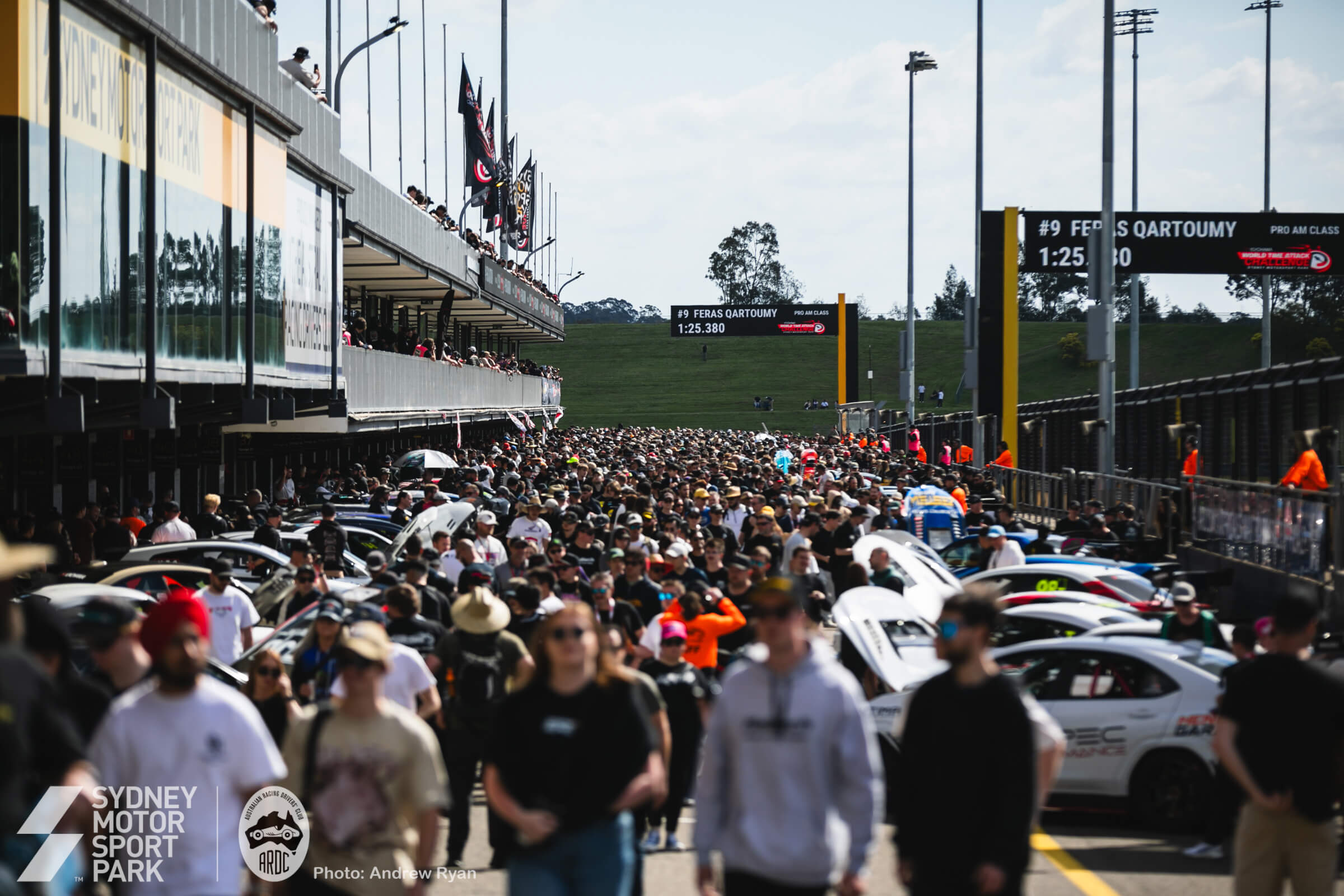
The Club measures its community work in donated track time. NIGHTDRIVE has put more than 5,000 learner drivers on this circuit after dark, in safety, since 2016. University engineering teams test here. Local schools run their cross country on it.
The Australian Motorsport Innovation Precinct sits trackside — a cluster for engineering, mobility research and new power sources including solar, electric and hydrogen. In March 2024 it hosted Australia’s first Sustainability in Motorsport Roundtable.
Ten years of this. Not one launch, but a decade of small, dated decisions.
Nothing on this rail is planned or projected. Each entry has already happened, and each is published somewhere the Club can be held to it.
The Club is a not-for-profit with a small team. Every program above is delivered with a named partner, and several of them hold themselves to targets tougher than ours.
Every venue hire agreement carries a sustainability annexure, and every hirer files an Event Sustainability Plan. The Club is explicit that organisations are at very different stages of this — some have only just begun — and asks what you are able to achieve.
Pick a material to see the rule, where it goes on site, and what it costs.
Teams and competitors are encouraged to take used tyres away and arrange sustainable disposal. Do not bring old tyres to the venue and leave them.
Pour all discarded oil into the receptacles and leave the area clean, with no spills. Empty 4-litre containers and 44-gallon drums go beside those receptacles only.
Do not put waste metal or car parts in general waste bins. Have one of your team take them safely to the designated metal bin.
Back of house only — bars, green rooms and vendor ingredients. All colours accepted. Please do not break it, for everyone’s safety.
There is currently no recycling pathway for carbon fibre at Sydney Motorsport Park. Do not place it in general waste bins — take it with you when you leave.
Anything with a plug, a battery or a power cord. In most states it is illegal for e-waste to enter landfill, and it must be separated from other waste.
Compostable packaging is not accepted by commercial composters in New South Wales under EPA restrictions, and currently goes to landfill. The Club is actively moving away from it. All packaging should be recyclable or reusable.
Not all of these are banned — they are listed because they cannot be recycled, composted or upcycled, and will end up in landfill.
Please do not bring waste from previous events to Sydney Motorsport Park — and not to your next venue either. Bump-outs are fast, furious and often late at night, but pre-dumping hampers sorting, increases landfill and raises costs for everyone on site.
It is a modest array and we would rather say so than round it up into a headline. It went on in 2016, when almost no Australian motorsport facility had solar at all, across the roofs of three service blocks at the Druitt North pit building — and it has since been extended into the AMIP precinct. Combined, the two carry 192 panels, avoiding around 60 tonnes of CO₂ a year. Its job is to offset the buildings that keep a race weekend running, and since 2022 the digital signage that replaced printed corflute. Continuing to invest in solar and EV charging is one of the Club’s published Key Programs.
Because there is very little published behind it, and padding it out would undermine everything else on this page. Water sits inside the Club’s monitoring commitment alongside energy, noise and air emissions rather than running as a program of its own. The one figure published is “40,000 kilolitres = 80% of total”, which appears in the Sustainable Event Guidelines and is quoted here exactly as written. There is no stormwater harvesting figure, no irrigation system and no consumption-reduction percentage, so none appears. When there is a measured series, this section will grow.
Because that is the most recent audit the Club has published, and we would rather show a dated figure than an undated one. Waste is audited quarterly by Closed Loop; the latest published quarter is Q2 2025, at 79.3% diversion. Every number on this page carries the period it covers for exactly this reason — so you can see how current it is instead of having to assume.
The Hyundai N EV Rapid Charging Station is open to every EV brand, not just Hyundai — but it is for motorsport charging only, so the general public cannot charge road cars there. There are four Type 2 plugs from two Tritium PKM 150 DC rapid chargers, at the end of the North Paddock by the final carports. Charging runs at 75c per kWh, paid by card with a $50 pre-authorisation and a $50 cap per session.
It becomes road. Any paper-based cup — even a plastic-lined one — can go into the Simply Cups receptacles at the Garage Café and around the venue. From there it is reprocessed into PAK-PAVE™, a road surface and lightweight concrete product. The roads to and from the Australian Motorsport Innovation Precinct on this site are made with it. 120,000 cups have been collected — the highest count in Western Sydney.
No — and this one surprises people. Compostable packaging is not accepted by any commercial composter in New South Wales under EPA restrictions, so despite the name it currently goes to landfill. Bagasse and PLA products are on our not-recommended list for that reason, and we are working with our caterer and food vendors to phase them out. Use cardboard, sustainable food-grade paper, wooden cutlery, paper cups, or rPET 1 and rPET 5 — all of which can actually be recovered here.
Every Venue Licence Agreement includes a sustainability annexure. You agree to work with the ARDC and Closed Loop on best practice for your event, to pass those expectations on to your partners, sponsors, categories, teams and competitors, to provide your environmental plan within 30 days, and to follow reasonable waste-management directives during your licence period. The Club is explicit that organisations are at very different stages — some have only just started — and asks what you are able to achieve rather than setting a single bar.
Because it is one of the documented reasons the diversion rate fell in 2023/24. Waste brought in from a previous event arrives unsorted and usually late, which means it cannot be separated and goes straight to landfill — taking the site’s numbers down with it and raising costs for everyone. It typically includes catering waste, polystyrene foam, pallets, soft and hard plastics, oil containers, carpet and metal. Take it with you, and dispose of it sustainably somewhere it can be.
Nothing here is estimated, projected or rounded up. Where a figure could not be sourced, it is not on the page — and in a couple of places we have said so explicitly.
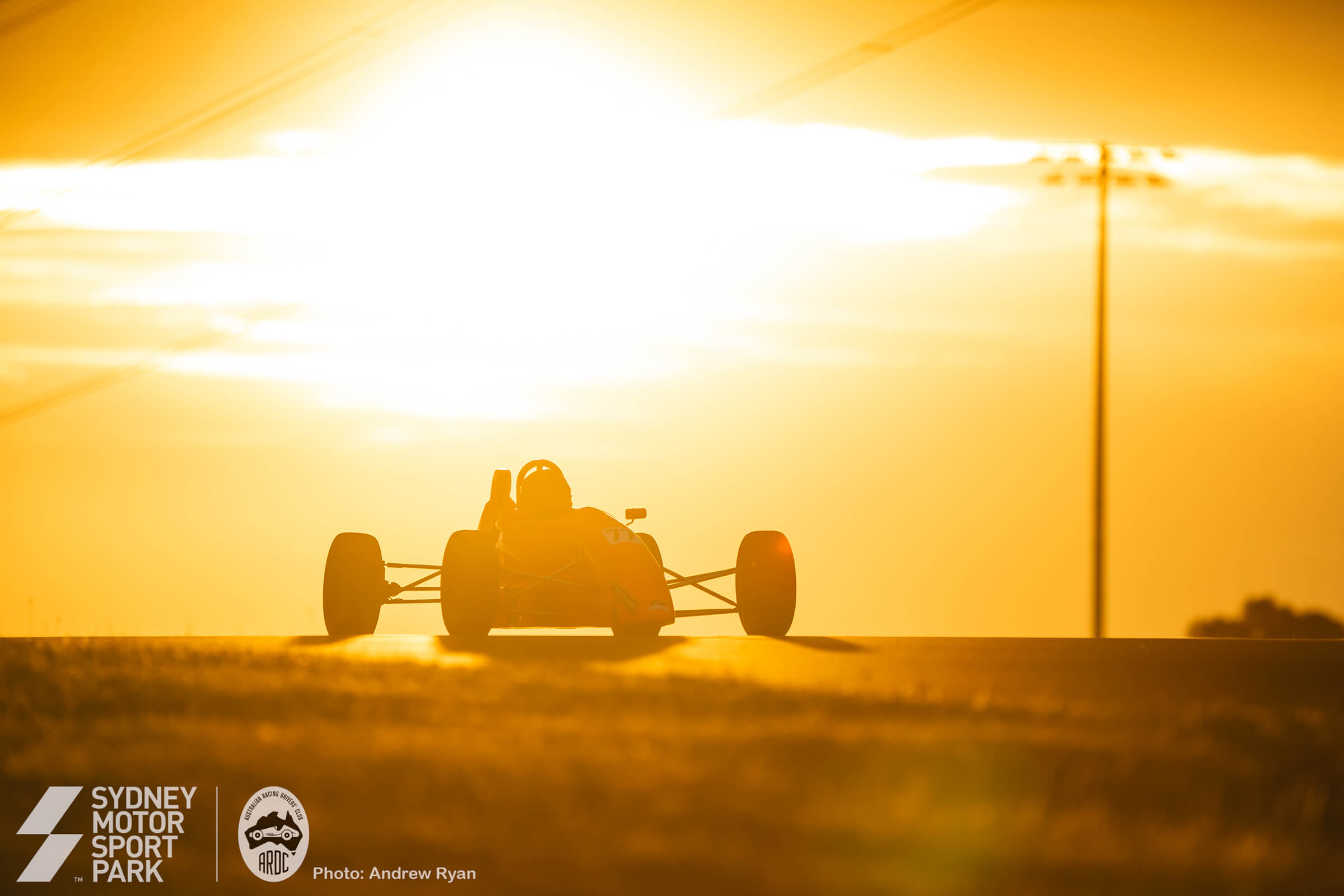
Seventy-five per cent of waste out of landfill by 2026 is the single dated, numeric target the Club publishes. Q2 2025 came in at 79.3% — ahead of it. A quarter is not a year, and the year it went backwards is on this page too.
The Club’s own framing, and the reason this page has a “not yet counted” column. If you want to be part of what comes next, start here.
Questions about sustainability at Sydney Motorsport Park, or about a program on this page?
Get in touch ← Back to Racing Green